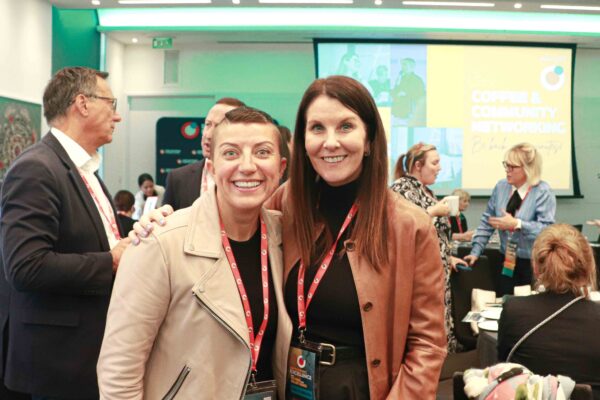

It was March 2026, possibly too late at night, and I was in the Philippines at ELKonnect, 5 ELK’s flagship client event. Our clients had descended on Cebu for a week with their team and a big dose of Filipino culture.
I was chatting with Tom Davis from Qualia Wealth about our experiences of working across cultures when he said something that felt like a mic drop:
“We spend so much time talking about the differences between Australia and the Philippines, but I don’t think we spend enough time talking about the similarities.”
The mic wasn’t the only thing that dropped. So did a penny. In one casual comment, Tom had put his finger on something I’d been missing for more than a decade. To understand why, we need to go back in time.

A quick rewind
I’ve worked with Filipino team members since 2013, across three different businesses. I’ve made plenty of mistakes along the way and, thankfully, turned most of them into lessons. But for 12 of those years, I was a client and my Filipino team were part of a service I paid for. I loved collaborating with team members in another country, but it always felt a little ‘arm’s length’.
That changed at the start of 2026, when I joined 5 ELK and a gained team of epic professionals across Cebu, Pampanga and Dumaguete. Face-to-face time in the Philippines, plus hundreds of hours of meetings with our team on the ground, has taught me more than the previous decade combined. I can’t count how many times I’ve thought, “gee, I wish I knew this 10 years ago!”
But even then, I was looking at it the wrong way. Like most people, I mostly thought about the cultural differences: communication styles, openness to challenging authority, ways of working. I was treating working in the Philippines as a puzzle to be solved. What new thing do I need to learn? How do I need to be different to lead them well? What am I getting wrong without realising it?
Good questions, all of them. But I’d been neglecting some others that might matter more:
What do we already have in common? (The answer includes pickleball and belting out Aerosmith. But that’s just scratching the surface.)
How would I lead this person if they sat next to me in the office?
What ways of working have served me well over the years, wherever I’ve worked?
Understanding cultural differences matters. Ignore them and you’re on a one-way ticket to disconnection. But every hour spent fixated on the differences is an hour not spent on what brings you together.
So what changed after my conversation with Tom? Well, I now see working with a Filipino team as a Venn diagram: some differences, but an enormous crossover.
Whether you’re yet to dip your toe in the offshoring waters or you’re a seasoned swimmer, the essentials still apply. None of them are rocket science, but you’d be surprised how many people forget them, especially with their global team. And the clients I see nailing offshoring do these things well… and the opposite is also true.
- Everyone wants to be treated as a person, not like a cog in a machine
Think about the best working relationship you’ve ever had. I guarantee the other person understood you, valued you and genuinely wanted the best for you. Too many businesses treat their offshore team like an ‘AI agent’ and forget there’s a human on the other side. Before you try to do any work with your offshore team, get to know them, their world and what matters most to them. If you don’t know the names of your team’s partners and kids, how they spend their spare time and what they want their life to look like, there’s some work to be done.
- People want to feel like part of a team, not like an outsider
‘Out of sight, out of mind’ is all too common in the global workforce. We all know what it feels like to be the ‘poor cousin’ or on the outer (cue memories of being the last person picked for every playground sporting team I wanted to join), and nobody brings their best from there. When you’re not in the same office, creating a shared identity matters even more: values everyone lives by, rituals everyone is part of, and gestures that show everyone is valued. Your team should be on your website, and just because they’re in another country doesn’t mean they shouldn’t have their own Christmas party.
- You can never be too clear (and you’re probably being less clear than you think)
I often laugh inside when I hear Western businesspeople lament the struggles of communicating across cultures. As if they’ve got it all figured out back home! Communication breakdowns are among the most common challenges I see in businesses everywhere. If you have human beings in your team, communication needs your attention, always. If you think you’re being clear enough, there’s a strong chance you’re not. Err on the side of more communication about priorities, deadlines and expectations, not less.
- People want to be treated like ‘the adults’, not ‘the kids’
“Mum and Dad talk about the important stuff, and we only tell the kids what they need to know.” If you love a strong hierarchy, this attitude is a great idea. But if you want a team who act like leaders, take initiative and bring their best, treat them accordingly. People want to understand the bigger picture. They love to see progress and be recognised for great effort, but they equally want to know what isn’t working, and be part of the conversation on why. Sugar-coat the bad stuff and your team will think you’re either disconnected from reality or hiding things. Both erode trust.
- All work and no play makes Johnny a burnt-out boy
High performers want to work hard and do a great job, but they’re not robots. Everyone wants a bit of fun, light relief and connection in their day. In remote work, the default is ‘work talk’, and over time that gets exhausting. So don’t feel guilty about small talk in a meeting; in fact, it might be the most valuable part of your time together. Build quizzes, games and ice-breakers into your meetings to get everyone smiling. Lead by example and drop your own guard: share your partner’s and kids’ names, how you spend your spare time and what you want your life to look like. When people feel relaxed and connected, the quality of their work goes up too.
The Wrap
None of this means ignoring what makes the people of the Philippines, or any corner of the world you work in, unique.
If you work with a group of Filipinos, I want you to know what calamansi juice tastes like.
I want you to understand why your team may be reluctant to question you, and how to make it safe for them to do so.
One day, I hope you get to experience riding a jeepney.
But I also want you to remember and practise what works in every strong relationship in your life: care about people as people, communicate well, and don’t make everything too serious!
Underneath the calamansi juice and the jeepneys, people are people.
If you start there, you’re going to go a very long way to building incredible remote working relationships, no matter where in the world your team are sitting.